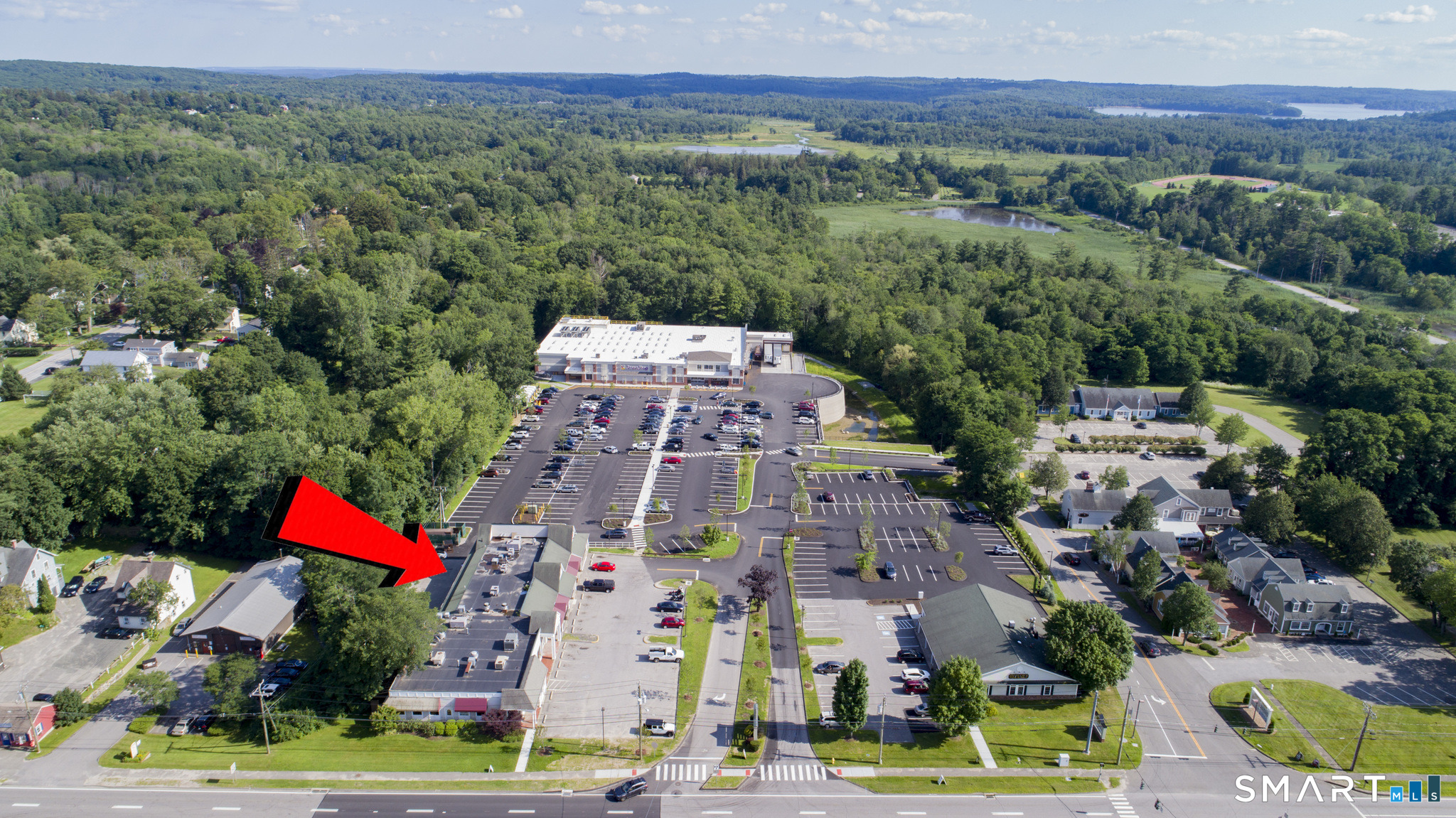
Candlewood Shores sits on the Brookfield shore of Candlewood Lake, a 1948 summer colony that grew into a year round neighborhood. It has a beach, a ball field, private roads and its own water utility. What makes it unusual on this lake is not any of those things. It is that a single body owns and operates all of them.
Most private communities around Candlewood split their governance. An association owns the common land and a tax district taxes and operates it, or a member corporation runs the amenities while a district sets a rate. Candlewood Shores does not split anything.
The Candlewood Shores Tax District acquired the community from Candlewood Shores Estates in 1986, financed the purchase with debt, and retired that debt in 2002. The beach, the ball field, the roads and the water system have been district property ever since, and tax revenue runs both the district and the water company.
For an owner that is mostly good news, because it collapses what would otherwise be three phone calls into one. Your water service, your road, your beach access and your second tax line are all the same organization, reachable at the district office on Longview Drive.
It also means you cannot reason about this community by analogy. Candlewood Isle, twenty minutes around the lake, publishes the exact opposite arrangement, with an association holding title and leasing to its district. Whatever you learned about one lake community here does not transfer to the next one.
The district publishes a schedule covering permits, refundable bonds, lake access and enforcement. Two things about it are worth knowing before you buy rather than after.
The permits are cheap and the bonds are not. A driveway or water permit is a nominal fee. The refundable bond that has to be posted alongside it is measured in thousands, per item, and a buyer planning a driveway and a water connection in the same season has to have that cash available before any work starts. The money comes back; it still has to exist first.
Enforcement is priced by the day, not by the incident. Ordinance penalties are stated per offense with each day counted as a fresh offense, and blight escalates weekly until it is resolved. That structure rewards fixing something in week one and punishes letting it sit, which is worth knowing if you are buying a property that needs work.
The current figures, line by line, are in the full write up of the district and its fee schedule. Confirm them with the district office before relying on any of them, because the published version carries a revision date and fees move.
Boat ramp access runs on a registered key, and the schedule does something a pure fee table would not: it escalates the deposit each time a key is lost, and then it stops. There is a hard ceiling on replacements.
Moorings, small vessel storage, beach passes and parking passes are all individually registered as well, and an unpassed vehicle at the beach or ball field is towed rather than ticketed.
The practical reading is that access here is a finite allocation attached to a household, not an amenity that scales with how many people are staying with you in July. Count what the property actually holds and confirm its status before closing, the same way you would with a slip anywhere else on this lake.
A house here carries Brookfield's rate and the district's rate on the same assessment.
The district rate has been effectively flat for four consecutive fiscal years, which makes it one of the two steadiest on the whole lake. That stability is genuinely useful for underwriting a purchase, and it is also about to be tested: Brookfield's next revaluation is the Grand List of October 1, 2026, the Assessor's own explainer ties it to bills due beginning in July 2027, and a revaluation resets the town rate and can move the district rate with it.
A flat district rate through a revaluation is not a promise. In New Fairfield most district rates fell when the town revalued, while one held completely still. Both happened on the same grand list.
How this community's ownership model differs from its neighbors is covered in Candlewood Isle, every district rate on the lake is in the second mill rate, and Brookfield's revaluation timeline is in what owners should expect.
Who owns the beach and the roads? The Candlewood Shores Tax District. It acquired the community in 1986 and retired the purchase debt in 2002, and it also runs the water utility.
Is that how the other lake communities work? No, and this is the point most worth carrying away. Candlewood Isle publishes the opposite arrangement. Read the governing documents of the specific community you are buying into rather than reasoning by analogy.
Who supplies the water? The district. Service, metering and connection are all one conversation with one body.
What will a driveway or water connection cost me up front? The permit is nominal. The refundable bond posted alongside it is measured in thousands per item and has to be available before work starts. Get the current schedule from the district office.
How does enforcement work? Penalties are stated per offense with each day counted as a fresh offense, and blight escalates weekly until resolved. An unpassed vehicle at the beach or ball field is towed rather than ticketed.
Is the district tax rate stable? It has been effectively flat for four consecutive fiscal years, one of the two steadiest on the lake. Brookfield's October 1, 2026 revaluation will reset the town rate and may move the district rate with it.
The 2026 conforming loan limit here is 977,500 dollars. Brookfield is in the Western Connecticut Planning Region. Where that line falls, and what it changes.