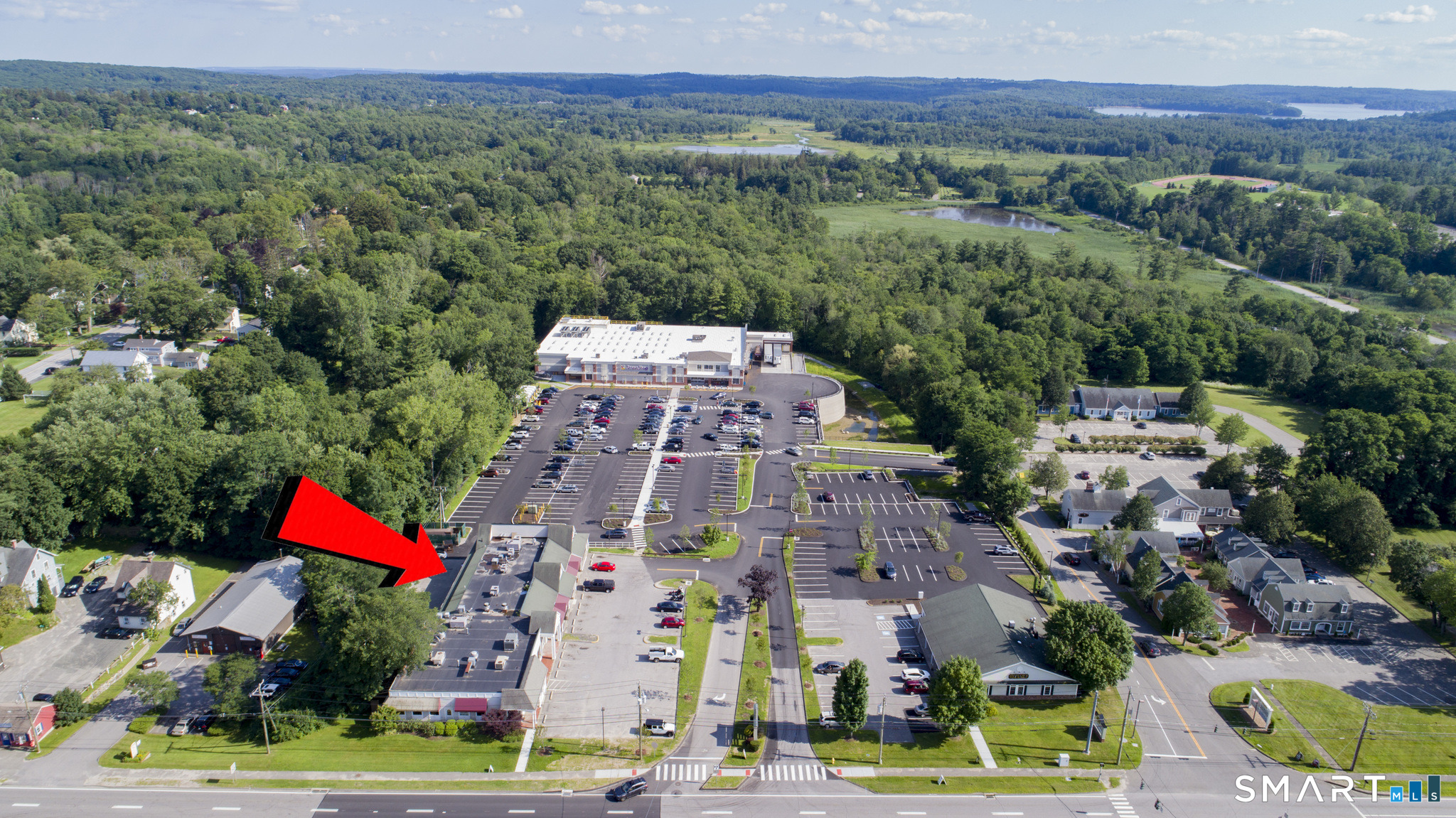
Candlewood Trails is a private, deed restricted community of 77 homes on the New Milford shore of Candlewood Lake, on the east side of the lake and the west side of Candlewood Lake Road North. It was incorporated in 1939. It is also governed differently again from the district communities and from the club communities, and the difference is the thing a buyer needs to understand first.
The Candlewood Trails Association is a Connecticut non-stock corporation. There is no second line on your town tax bill here, because there is no special tax district. What there is instead is a set of documents referenced by every property title.
Every property title in the community references the Association's Declaration of Restrictions and Bylaws. Alongside those sit Rules and Regulations, Beach Rules and Regulations, and a separate Boat Slip Policy. Membership is not something you apply for and are approved into. It comes with the deed, and so do the restrictions.
That is a genuinely different arrangement from its neighbors. In Candlewood Shores a tax district owns the community outright. On Candlewood Isle an association holds title and leases to a district. In Candlewood Lake Club membership requires stock plus an approved application. Here the governing documents are attached to your title and the money is an assessment rather than a tax.
What that means for your obligations as an owner is a question for your closing attorney, and the documents that describe them are the ones to read before you write an offer, not after.
This is the single most important thing to know here, and the Association states it flatly in its published Boat Slip Policy:
"When a Homeowner/Renter leaves CTA their slip becomes available, it does not transfer to the next Homeowner/Renter. It returns to the pool of available slips."
So a listing that mentions a slip is describing something the seller had, not something you are buying. The policy is unusually specific about how you get one, which is helpful rather than restrictive if you read it before closing.
There is an enforcement edge too: an owner required to remove a boat has two weeks from notification, and after that the policy sets a fine of 25 dollars a day until it is removed.
Candlewood Trails operates a water system for its members, and that carries obligations you would normally associate with a utility rather than a neighborhood.
The Association is required to provide members with an annual Consumer Confidence Report explaining water quality, and it publishes a Public Notification regarding water system chlorination in the form the Connecticut Department of Public Health requires. The Association lists a Water Committee, with a named contact.
Ask for the most recent Consumer Confidence Report before you buy. It is a document the community must produce anyway, it is specific to this system, and it tells you more about what you are connecting to than any conversation will.
Both directions are governed here: the Association has rules for owners who rent their house out and for the tenants who live in it.
A renter must have a valid rental agreement on file with the CTA Board, and the Association publishes a House Rental Form. Renters may request a slip, but they pay 150 percent of the slip fee and rank below every owner.
The sharpest line in the policy is aimed at tenants: "If you are renting your home from a CTA member 'not in good standing' you lose all access to recreational facilities." A tenant here can be cut off from the beach and the docks by their landlord's arrears, through no act of their own. If you are buying to rent out, that is a reason to stay current that goes beyond your own use.
The Bylaws prescribe four standing committees, and the President may appoint others as necessary. The Association currently lists Nominating, Rules and Regulations, Land, Planning and Finance, Beach and Clubhouse, Docks, Road, Social, Sunshine, Triangle and Pump House, and Water. All committee members are volunteers.
The annual meeting elects officers and directors and approves the annual budget, and notice goes to members by mail and email. Changes to the Boat Slip Policy require the proposal to be circulated to the community at least ten days before the board meeting, and seven of ten board votes to pass.
For how the New Milford lake communities differ from one another, see they all say private access, they do not all mean the same thing, and for the district communities and their second mill rate, the second mill rate. The general question of what a dock does and does not convey is in your Candlewood dock permit does not come with the house.
Is there a tax district here? No. Candlewood Trails is a Connecticut non-stock corporation, and its obligations come through the Declaration of Restrictions and Bylaws referenced by every property title rather than through a second tax line.
Does a boat slip come with the house? No. The Association's Boat Slip Policy says a departing owner's or renter's slip returns to the pool of available slips and does not transfer to the next occupant.
How do I get a slip? Apply to the Dock Committee by January 31 with the form, registration, proof of insurance and payment. Allocations are shared no later than April 2. Owners who held a slip the prior year are prioritized, then other owners, then renters.
What boats qualify? Sixteen to twenty six feet and motorized. Kayaks and paddleboards use the racks.
Who supplies the water? The Association operates the water system and issues an annual Consumer Confidence Report to members, plus Department of Public Health notifications about chlorination.
Can I rent my house out? Renters must have a rental agreement on file with the Board, and there is a House Rental Form. A renter pays 150 percent of the slip fee and ranks below owners, and a tenant loses access to recreational facilities if their landlord is not in good standing.
How old is the community? The Certificate of Incorporation is dated September 11, 1939.
The 2026 conforming loan limit here is 977,500 dollars. New Milford is in the Western Connecticut Planning Region. Where that line falls, and what it changes.