Most people buying on Candlewood are buying a second home, and most of them assume the financing question is simply a larger down payment. There is a more basic question underneath it, and it catches lake buyers specifically: whether the house qualifies as a second home at all.
Fannie Mae publishes the criteria in its Selling Guide. Two of them collide with how a lot of Candlewood housing was actually built and how a lot of buyers intend to use it.
What the guideline actually requires
Under Fannie Mae's occupancy types, a second home:
- "must be occupied by the borrower for some portion of the year"
- "is restricted to one-unit dwellings"
- "must be suitable for year-round occupancy"
- "the borrower must have exclusive control over the property"
- "must not be rental property or a timeshare arrangement"
- "cannot be subject to any agreements that give a management firm control over the occupancy of the property"
An investment property, by contrast, is "owned but not occupied by the borrower," and carries additional loan level price adjustments.
The first collision: "suitable for year-round occupancy"
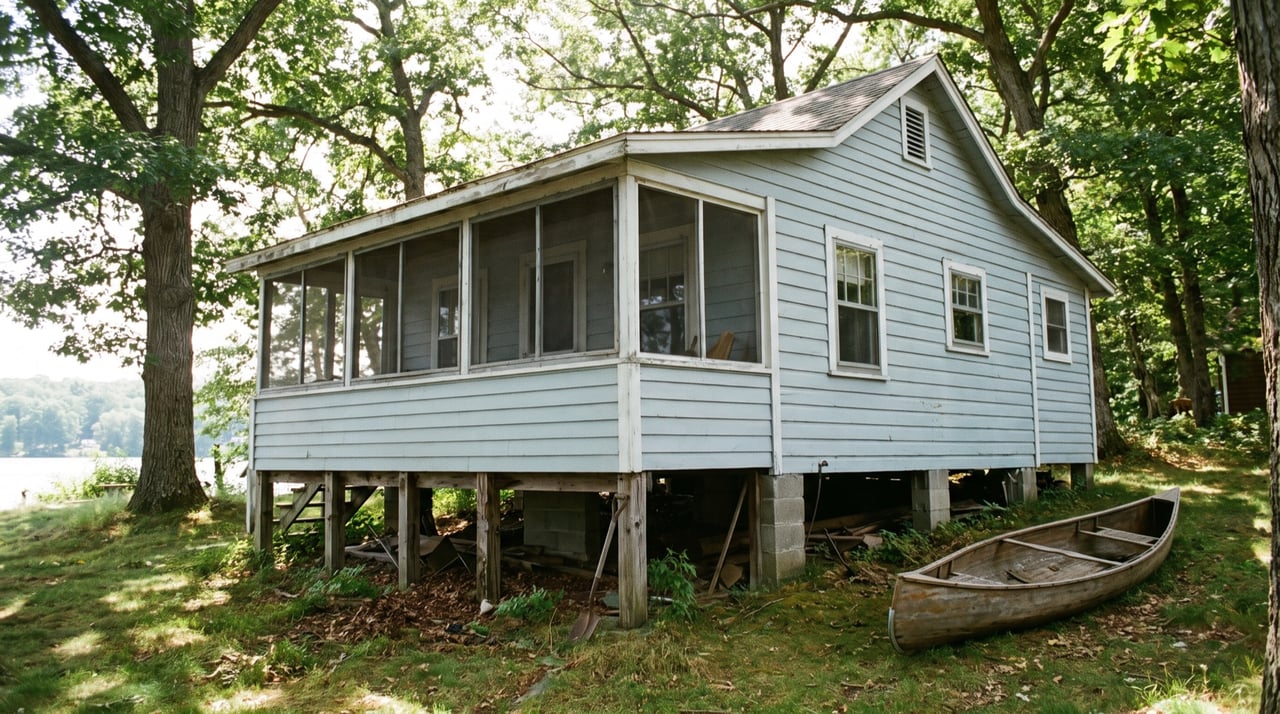
A meaningful share of what I see on this lake started life as a summer cottage. I have not found a published figure putting a number on it, so take that as an observation from working here rather than a statistic. Some has been fully winterized. Some has not, and the listing does not always say so.
That is normally discussed as a comfort question, whether you could actually live there in February. It is also a financing question. A property that is not suitable for year-round occupancy does not meet the second home criterion, whatever the buyer intends to use it for. And it is worse than a classification problem. Year-round suitability is not a second home rule at all, it is a general property eligibility requirement. Fannie Mae’s Selling Guide B2-3-01 states that the mortgaged premises must be "suitable for year-round use," and that Fannie Mae does not purchase or securitize mortgages on properties that are not suitable for year-round occupancy regardless of location. So a genuinely seasonal cottage does not become financeable by calling it an investment property or a primary residence instead. There is no lesser category to fall back to on a conforming loan.
The practical tells are the same ones that matter for the rest of the purchase: a foundation rather than an uninsulated crawlspace, plumbing that is not drained every fall, a real heating system rather than window units and a wood stove, and septic and well sized for full time use. I set those out in the Candlewood Lake buyer's guide.
An appraiser forms a view on this. If that view and your assumption differ, you find out late, when the appraisal comes back and the loan has to be re-cut as something else.
The second collision: renting it out
The guideline says a second home "must not be rental property" and "cannot be subject to any agreements that give a management firm control over the occupancy of the property."
Read that against how many lake buyers plan to offset carrying costs. Handing a property to a management company that controls the calendar is precisely the arrangement that clause describes.
There is nuance, and it cuts in the buyer's favor more than people expect. Fannie Mae's rental income guidance says that if a lender identifies rental income from the property, the loan can still be delivered as a second home as long as that income is not used for qualifying purposes and the other second home requirements are met.
So occasional rental is not automatically fatal to the classification. Using the rental income to qualify for the loan is a different matter, and generally rental income from a second home cannot be used to qualify the borrower.
That is the distinction to bring to a lender: not "can I ever rent it," but "am I relying on the rent to qualify, and is anyone else controlling the occupancy."
Why this stacks with the short term rental question
A buyer planning to rent has two independent gates, and clearing one says nothing about the other.
- The town decides whether short term renting is permitted at that address. Connecticut left that to municipalities, and no Candlewood town appeared in the state's survey of towns with express rules, which is not the same as permission.
- The lender decides how the loan is classified, using the criteria above.
A property can be zoned to allow it and still not finance as a second home. It can finance cleanly and still be prohibited by an association covenant. These are separate questions asked by separate parties, and the answers arrive at different points in the transaction.
What to do about it
- Tell your lender what you actually plan to do with the house, including any rental intent, before you are under contract. The classification drives the rate, the down payment and whether the loan works at all.
- If the house is a converted or unconverted cottage, raise year-round suitability early. Do not let the appraisal be the first time anyone forms a view on it.
- Do not build rental income into your qualifying math until a lender confirms in writing that it can be used, because on a second home it generally cannot.
- Ask the zoning question separately, of the town, for the specific address.
None of this makes a lake house hard to finance. Most of them finance without drama. It means the two assumptions people carry into a lake purchase, that a summer place is a second home and that they can rent it to cover costs, are both worth checking before they are load bearing.
The property side of the guideline, in Fannie Mae's words
The occupancy table above is only half the test. The other half sits in the Selling Guide's general property eligibility section, B2-3-01, which applies to every loan Fannie Mae buys regardless of occupancy type, and it is where a seasonal cottage can fail before the second home question is even reached. The mortgaged premises must be, in the guide's list, "residential in nature as defined by the characteristics of the property and surrounding market area," "safe, sound, and structurally secure," a legal or legal non-conforming use, "readily accessible by roads that meet local standards," "served by utilities that meet community standards," and "suitable for year-round use." Then comes the note written for lakes like this one: "Certain aspects of the location of a property will require special consideration. For example, properties in resort areas that attract people for seasonal or vacation use are acceptable only if they are suitable for year-round use." Among the properties the guide lists as ineligible outright are those "that are not readily accessible by roads that meet local standards."
Read against a Candlewood cottage, that produces three questions an appraiser will answer whether or not anyone asks them: whether the road in is a maintained road that a lender's definition of local standards covers, which on a private lake road that is not plowed is a real question; whether the utilities, including a seasonal water line that is drained each fall, meet community standards; and whether the structure is suitable for year-round use in the sense of the guide, which is the same evidence, foundation, heat, insulation and plumbing, that the second home table's "suitable for year-round occupancy" requirement turns on. The occupancy table also carries a price: "An LLPA applies to certain loans secured by second homes. This LLPA is in addition to any other price adjustments that are otherwise applicable to the particular transaction," with the amounts in Fannie Mae's Loan-Level Price Adjustment Matrix rather than in the guide text. And the rental nuance is stated directly in the table's footnote: "If the lender identifies rental income from the property, the loan is eligible for delivery as a second home as long as the income is not used for qualifying purposes, and all other requirements for second homes are met (including the occupancy requirement above)."
Source: Fannie Mae Selling Guide, B2-1.1-01 Occupancy Types (10/05/2022) and B2-3-01 General Property Eligibility (09/03/2025), read on selling-guide.fanniemae.com September 4, 2026. Quoted as published; lenders apply overlays of their own, and the guide changes, so confirm the current text with the lender before relying on it.
Common questions about financing a Candlewood second home
What makes a property a second home for financing?
Fannie Mae's Selling Guide requires that it be occupied by the borrower for some portion of the year, be a one-unit dwelling, be suitable for year-round occupancy, be under the borrower's exclusive control, not be rental property or a timeshare, and not be subject to agreements giving a management firm control over occupancy.
Can a summer cottage be financed as a second home?
Only if it is suitable for year-round occupancy, which is one of the published criteria. A cottage that has not been winterized may not meet it regardless of how the buyer intends to use it. On Candlewood this matters more than in most markets, because a good deal of the housing here began as seasonal construction. Raise it with your lender early rather than discovering it at appraisal.
Can I rent out a second home?
Occasional rental does not automatically change the classification. Fannie Mae's rental income guidance says a loan can still be delivered as a second home if rental income is identified, provided that income is not used for qualifying and the other second home requirements are met. An arrangement giving a management firm control over the occupancy is a different matter, and is specifically excluded.
Can I use expected rental income to qualify?
Generally not on a second home. Fannie Mae's guidance is that rental income from a second home cannot be used to qualify the borrower, with limited exceptions that do not typically apply to a lake house. Confirm with your lender in writing before relying on it.
Does zoning approval mean my lender will treat it as a second home?
No. They are separate questions decided by separate parties. The town decides whether short term renting is permitted at the address. The lender decides how the loan is classified. Clearing one tells you nothing about the other.
Sources: Fannie Mae Selling Guide, B2-1.1-01 Occupancy Types, B2-3-01 General Property Eligibility, and B3-3.1-08 Rental Income. Requirements are those published by Fannie Mae for conforming loans and can change.
Related reading:short term rentals and what a town's silence does not mean, the Candlewood Lake buyer's guide, and only one of your selling costs is set by law.
More on this area:Candlewood Lake waterfront overview.
If you are buying a second home on the lake and want the year-round suitability and rental questions raised before they become problems, reach me through ConnorCTHomes.com.
Connor Kostyra, Licensed Real Estate Salesperson, CT Lic. RES.0836348.
Connor CT Homes is a marketing brand. Real estate services are provided through RE/MAX Rise, 1297 Main Street, Watertown, CT 06795.
This article is general information and not lending advice. I am not a mortgage lender or broker. The criteria quoted are from Fannie Mae's published Selling Guide for conforming loans; portfolio and non-conforming lenders may apply different standards, and guidelines change. Confirm your specific situation with a licensed mortgage professional before relying on any of it.