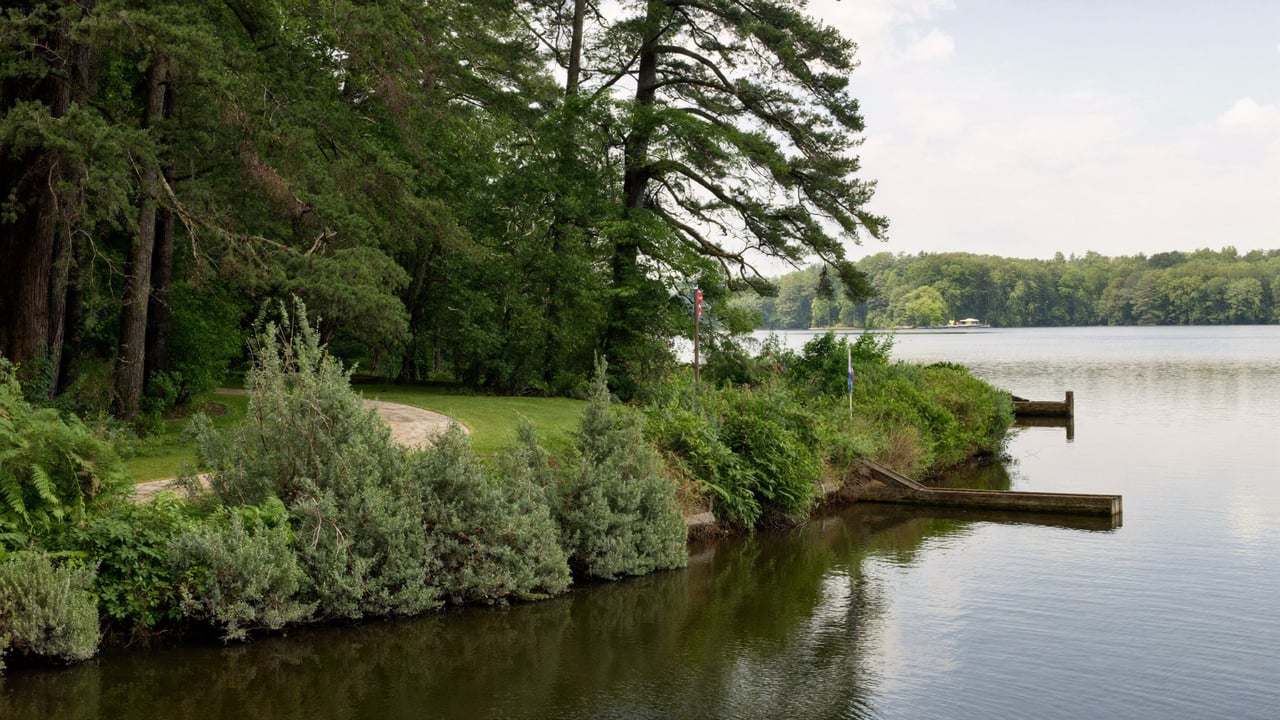
One of the most misunderstood facts about Candlewood Lake is also one of the most important: most lakefront owners do not actually own the shoreline.
The land between your deeded property line and the water is owned and regulated by FirstLight, the company that operates the lake. That single fact controls almost everything about how docks, lifts, walls, vegetation, and shoreline work happen on Candlewood, and it’s where most of the confusion at closing comes from.
The Project Boundary: Where Your Property Actually Ends
Candlewood Lake is a man-made hydroelectric reservoir, not a natural lake. It's part of the Rocky River Project, which is owned and operated by FirstLight CT Housatonic LLC under a federal license from FERC.
According to the Candlewood Lake Authority's shoreline homeowners page, roughly 95% of Candlewood Lake waterfront property owners own down to the Rocky River Project Boundary, but not below it. Once you cross that boundary line, the land belongs to FirstLight, all the way to the water.
That means your dock, your boat lift, your stairs to the water, your retaining wall, and any tree work near the shoreline are usually located on FirstLight land, not yours.
What Requires a FirstLight Permit
Any modification to the land or structures below the Project Boundary requires prior approval from FirstLight. The Candlewood Lake Authority directs owners to FirstLight's permitting portal at firstlightpower.com/permits for all shoreline-related work.
Common items that require a permit include:
- New docks, dock replacements, and dock modifications
- Boat lifts and mooring buoys
- Stairs, walkways, and pathways across the shoreline
- Retaining walls, riprap, and erosion work
- Tree and vegetation removal below the Project Boundary
If you are buying a Candlewood lakefront home, confirm that any existing shoreline structure is properly permitted, and understand that the permit itself is not something you inherit. FirstLight is explicit that a new owner has to submit their own shoreline and land use application, and produce the deed confirming the change in ownership, before that application can be completed. Unpermitted dock or wall work is a real issue on this lake, and it becomes the new owner's problem, not the seller's. See your dock permit does not come with the house.
What's Changing in 2026: The Updated Shoreline Management Plan
FirstLight is required to review its Shoreline Management Plan every six years. The new version, filed in March 2025 and supplemented in March 2026, is the document that will govern how shoreline permits, fees, mooring rules, vegetation guidelines, and deeded rights are handled going forward. I read it against the approved plan line by line in what changes in the proposed Candlewood shoreline plan: permit fees go up, and engineered design for seawall work moves from discretionary to required.
According to the Federal Register notice, FERC accepted FirstLight's application to update the Shoreline Management Plan, with a public comment, intervention, and protest deadline of April 27, 2026.
The Candlewood Lake Authority's summary of the plan update explains that the revised document covers the fee and enforcement structure for shoreline applications, vegetation removal guidelines, mooring permit requirements, and how deeded rights are registered.
The comment period has now closed. The plan is in FERC's hands for review. Any final approved version will eventually replace the rules currently in force, so owners and buyers should expect the permit process and fee structure to evolve once FERC issues its decision.
The Annual Drawdown and Why It Matters for Docks
FirstLight lowers Candlewood Lake each winter as part of normal hydroelectric operations, and the timing runs later than most people assume. FirstLight may begin as early as November 1, but says the drawdown "has typically been initiated between December and February." The last cycle began on January 19, 2026. The 2025-2026 shallow drawdown announcement set the normal summer operating range at 429.5′ to 427′, with the shallow drawdown targeting 424′ and a winter pumping and generation range of 424′ to 422′.
For shoreline owners, the practical takeaway is the same every year: removable docks, lifts, and floating structures should come out before winter to avoid ice damage. CLA states this directly in their drawdown communications.
If you are buying a property in late spring or summer, the lake looks full and the shoreline looks finished. In late fall and winter, the same shoreline can drop several feet and expose mud, exposed pilings, and stranded structures. That is normal, but it changes how a property is used roughly half the year.
Boating Rules That Affect Lakefront Properties
Even if your shoreline is set up perfectly, what happens on the water is regulated by the Candlewood Lake Authority Marine Patrol and the Connecticut DEEP EnCon Police.
According to the CLA boating rules summary, the daytime speed limit is 45 mph and the nighttime limit is 25 mph. No motorboat may exceed Slow-No-Wake within 100 feet of shore, a dock, a designated swim area, a float, or an anchored or moored vessel. Personal watercraft must observe a 200-foot version of that rule.
The same source confirms that vessels 26 feet or longer are restricted from Candlewood Lake unless specifically authorized by the Commissioner of DEEP. Connecticut’s safe boating rule catches more people than most buyers expect, and lakefront buyers in particular. CGS Sec. 15-140e provides that "no resident of the state, person owning real property in the state or person owning a vessel in the state" may operate a registered vessel on Connecticut waters without a US Coast Guard operator license or a safe boating certificate issued by DEEP. Read that middle clause: buying a Candlewood lakefront home makes you a person owning real property in the state, so the requirement attaches to you whether or not you live here and regardless of how many days you use the lake.
For a lakefront owner, those rules shape how guests dock, how close other boats can pass, and what a buyer can realistically operate from the property.
Bottom Line
- Most Candlewood Lake waterfront owners do not own the shoreline. FirstLight does.
- Any work on docks, lifts, walls, stairs, or vegetation below the Project Boundary requires a FirstLight permit.
- FirstLight filed an updated Shoreline Management Plan in March 2025 and supplemented it in March 2026; the public comment period closed April 27, 2026, and the plan is now under FERC review.
- Annual drawdowns are predictable and routine. Removable structures should come out before winter.
- Boating rules (speed limits, the 26-foot restriction, the Safe Boating Certificate) apply to anyone using the lake.
If you are looking at a lakefront home, the questions to ask are not just about the house. Ask whether the dock and shoreline structures are permitted, where the Project Boundary actually sits on the parcel, and how the property handles the winter drawdown.
Sources
- Candlewood Lake Authority: Shoreline Homeowners
- FirstLight: Permits
- Federal Register: FirstLight CT Housatonic LLC; Notice of Application to Update Shoreline Management Plan
- Candlewood Lake Authority: Shoreline Management Plan Review/Comment Period Open
- FirstLight Press Release on Planned Shallow Drawdown for 2025-2026 Winter Season
- Candlewood Lake Authority: What Boaters Need to Know
License / Representation Note
Connor Kostyra is a Real Estate Salesperson with RE/MAX RISE. This post is informational and based on publicly available sources from the Candlewood Lake Authority, FirstLight, and the Federal Register. Anyone making decisions about a specific property, dock, or shoreline structure should verify current rules directly with FirstLight and the relevant municipality.
Watch: most homes on Candlewood do not own their waterfront
The same question, answered on camera in a few minutes, with the shoreline in the background rather than a deed map. If you are about to tour a lakefront listing this week, this is the version to send whoever is coming with you.
Shoreline ownership is one thread of a much longer story about how this lake is run. The rest of it, from the drawdown to the dock permits to who patrols the water, is indexed in every Candlewood Lake guide on this site, by question.
Common questions about Candlewood shoreline ownership
If I buy a Candlewood lakefront home, do I own the shoreline?
Usually not. The Candlewood Lake Authority's shoreline homeowners page puts it at roughly 95 percent of Candlewood waterfront owners owning down to the Rocky River Project Boundary, but not below it. Past that line the land belongs to FirstLight, all the way to the water. In practice that means your dock, your boat lift, your stairs to the water, your retaining wall and any tree work near the shoreline usually sit on FirstLight land rather than on yours.
What shoreline work needs a FirstLight permit?
Any modification to the land or structures below the Project Boundary requires prior approval. Common items include new docks, dock replacements and dock modifications, boat lifts and mooring buoys, stairs, walkways and pathways across the shoreline, retaining walls, riprap and erosion work, and tree or vegetation removal below the boundary. The Candlewood Lake Authority directs owners to FirstLight's permitting portal for all shoreline related work.
What is changing in the 2026 Shoreline Management Plan?
FirstLight has to review the plan every six years, and the version filed in March 2025 and supplemented in March 2026 is the one that will govern shoreline permit fees and enforcement, vegetation removal guidelines, mooring permit requirements and how deeded rights get registered. FERC accepted the application with a public comment, intervention and protest deadline of April 27, 2026. That period has closed and the plan is now under FERC review, so owners and buyers should expect the permit process and fee structure to change once FERC issues its decision. The specific changes, including the new fee schedule and the seawall engineering requirement, are compared in what changes in the proposed Candlewood shoreline plan.
How far does the lake actually drop in the annual drawdown?
The 2025 to 2026 shallow drawdown announcement set the normal summer operating range at 429.5 to 427 feet, with the shallow drawdown targeting 424 feet and a winter pumping and generation range of 424 to 422 feet. Removable docks, lifts and floating structures should come out before winter to avoid ice damage. This matters when you are touring: a shoreline that looks finished in July can be mud, exposed pilings and stranded structures in December.
What boating rules should a lakefront buyer know about?
The Candlewood Lake Authority puts the daytime speed limit at 45 mph and the nighttime limit at 25 mph. No motorboat may exceed slow no wake within 100 feet of shore, a dock, a designated swim area, a float, or an anchored or moored vessel. Vessels 26 feet or longer are restricted from Candlewood unless specifically authorized by the Commissioner of DEEP, and Connecticut requires a Safe Boating Certificate to operate a motorized vessel. Those rules shape how guests dock and what a buyer can realistically operate from the property.
Related reading:Candlewood's drawdown, in FirstLight's own words, what the Candlewood Lake Authority asks of a lakefront owner.
Connor Kostyra, Licensed Real Estate Salesperson, CT Lic. RES.0836348.
Connor CT Homes is a marketing brand. Real estate services are provided through RE/MAX Rise, 1297 Main Street, Watertown, CT 06795.
This article is general information, not legal advice. Details change; confirm current facts with the town, the community and the relevant agency before relying on anything here.