Buyers ask me some version of this on almost every waterfront showing. Is the water clean? Is there anything in the lake I should know about?
The honest answer has two halves, and most people have them backwards. One invasive species is already here and is going to cost you money on your dock. Another one everybody worries about is not in Candlewood at all, at least not yet.
Zebra mussels are here, and they are established
The first ones turned up in 2020. According to the Candlewood Lake Authority, "In 2020, nearly 50 Zebra Mussels were discovered in Candlewood Lake."
That is no longer the situation. FirstLight, which operates the lake, told community leaders in a letter dated August 5, 2022 that zebra mussels "were not only established throughout Candlewood Lake but were also capable of reproducing." The Lake Authority now says the population "has expanded significantly," and that this is the case "in most areas of Candlewood Lake."
Established and reproducing is a different problem from a few sightings. It is not something that gets removed. It is something you manage, permanently.
What that actually means if you own here
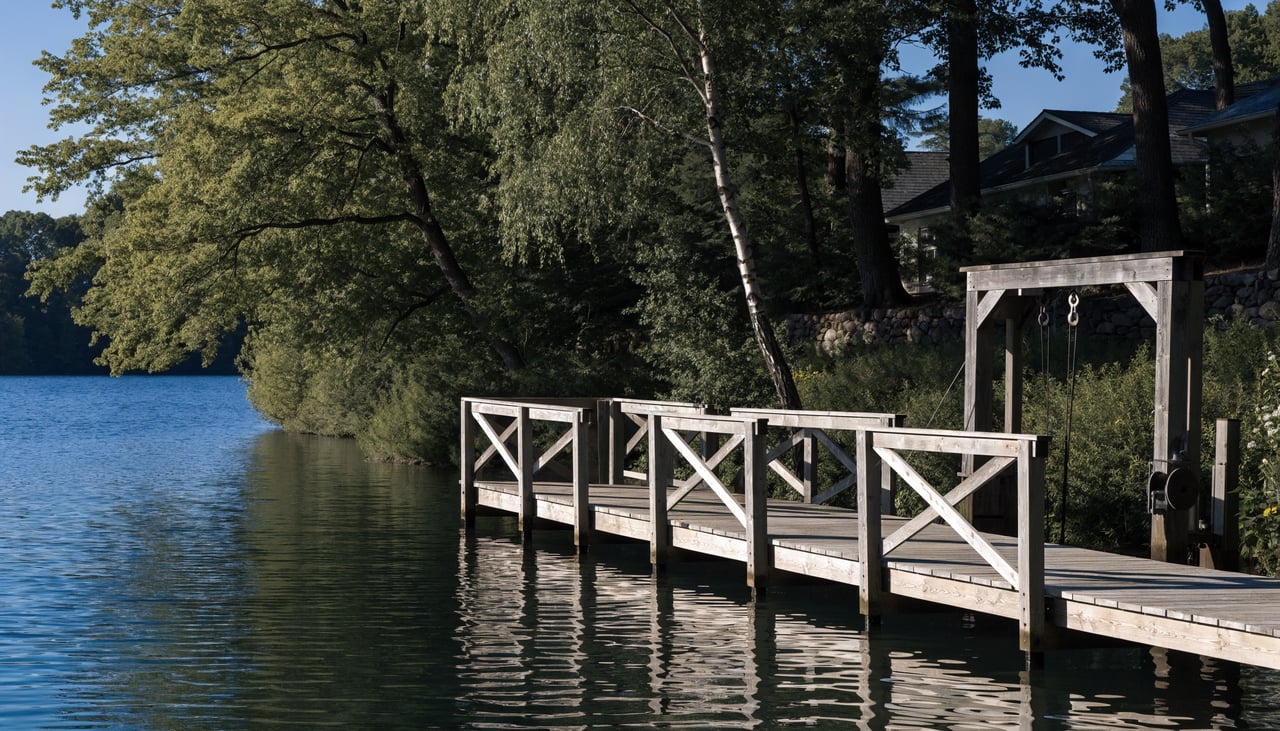
Your dock and your boat. The Lake Authority is direct about it: zebra mussels "can do damage to boats and docks if left on for extended periods." That is a recurring maintenance line item on any structure that sits in the water, and it is worth asking a seller how they have been handling it.
Swimming. "Zebra Mussels are sharp, so when swimming, it is advised to wear water shoes to protect your feet." That is a practical change to how a lakefront property gets used, particularly with kids.
Water clarity, which cuts both ways. They are filter feeders, filtering up to a litre per day each. Clearer water sounds like good news, and it looks like good news. It is not straightforwardly good, because that filtering removes organisms at the base of the food chain and pressures native species.
Removal. The Authority's guidance is to let them dry out before removing them and throwing them away.
One consequence most owners never heard about
Candlewood is a pumped storage reservoir. Water moves between the lake and the Housatonic River through a penstock down to the Rocky River Powerhouse. For about a decade FirstLight ran a voluntary summer pumping restriction, partly to reduce the chance of moving invasive species into the lake.
In that same August 2022 letter, FirstLight said it had decided to eliminate that voluntary summer pumping restriction, on the reasoning that the species it was meant to keep out was already present and self sustaining.
Whatever you think of that logic, it is worth knowing, because it is the kind of operational change that quietly affects the lake you are buying on and that never appears in a listing.
Hydrilla is the one to actually watch, and it is not here
Hydrilla is the invasive that gets people genuinely alarmed, and for good reason. It forms dense mats, it is extremely difficult to remove once established, and it spreads by fragmentation, meaning a single broken piece carried on a trailer can start a new population.
It is not in Candlewood Lake. It is in the Connecticut River, where it was first discovered in 2017 and has since spread from the Massachusetts border south throughout the river. It is also in the Housatonic.
That last part is why this matters here rather than being somebody else's problem. The Housatonic is the water body Candlewood exchanges water with. The Lake Authority's instruction is blunt and it is the whole prevention strategy: "Always CLEAN, DRAIN and DRY your boat, trailer, and equipment before entering Candlewood Lake."
Eurasian watermilfoil, for what it is worth, has been in Candlewood for decades. The Authority describes the lake as having "already been battling an abundant invasive plant species for decades." That one is old news and is managed, not solved.
How this should change what you do
If you are buying waterfront. Look at the underside of the dock and the boat lift, not just the deck. Ask what the seller has been doing about mussels and how often. Budget for it the way you would budget for a seawall or a roof, because it is now a permanent line rather than an event.
If you are selling. Clean structures show better and they signal a property that has been maintained. A buyer who finds a heavily encrusted lift late in diligence will price that in, and usually for more than the actual cost of dealing with it.
If you own a boat and you move it between lakes. Clean, drain, dry. Every time. Not because a sign told you to, but because hydrilla arriving in Candlewood would be a materially worse outcome for every waterfront value on this lake than anything currently in the water.
What I am not going to tell you
I am not going to put a dollar figure on annual mussel maintenance, because it varies enormously by structure type, depth and how long a dock stays in. Ask two local marine contractors for a real number on the specific property.
And conditions change. The Lake Authority and Connecticut DEEP are the current sources on what is in the water, not this article. If you are making a purchase decision on it, check the Lake Authority's invasive species pages and CT DEEP directly for the current picture.
Related reading: Candlewood's drawdown, in FirstLight's own words, where Candlewood's weeds went, and when they come back, who launches on Candlewood Lake, the Authority's 2025 steward report, Candlewood Lake water quality in 2025, read for a buyer, what the Candlewood Lake Authority asks of a lakefront owner, your dock permit does not come with the house, what the 2026 deep drawdown changed, and the AIS stamp most boaters missed.
More on this area: Candlewood Lake waterfront overview.
If you are buying or selling on Candlewood and want the water and structure questions answered properly before they cost you, start at ConnorCTHomes.com.
Connor Kostyra, Licensed Real Estate Salesperson, CT Lic. RES.0836348.
Connor CT Homes is a marketing brand. Real estate services are provided through RE/MAX Rise, 1297 Main Street, Watertown, CT 06795.
This article is general information, not environmental, legal or engineering advice. Lake conditions change. Confirm the current status of any species with the Candlewood Lake Authority and Connecticut DEEP.
Where it stands in September 2026, by the bodies that track it
Checked September 4, 2026. The Candlewood Lake Authority's invasive species page still names zebra mussels "the biggest outside threat to Candlewood at the moment," lists the waters they now inhabit as "the Housatonic River, Lakes Zoar and Lillinonah, Lake Housatonic, the Twin Lakes, the Hudson River, Lake George, and Lake Champlain," and says "the plants hydrilla and water chestnut" are "of concern as both have been found recently in nearby water bodies." Its zebra mussel page describes the population in the lake as having "expanded significantly," says owners "will likely begin to find zebra mussels attached and growing" on boats, ladders and docks, and adds that "this is the case in most areas of Candlewood Lake." Its hydrilla page's "Last Seen" list is the Connecticut River, the Hudson River and Hudson Valley reservoirs; Candlewood is not on it, which is the whole basis for the title of this article, and the day the Authority's list changes, this article changes with it.
Downstream the picture is different, and it is the state saying so. The Department of Energy and Environmental Protection's two Lake Lillinonah launch pages warn in capital letters that hydrilla "has been recently found in this waterbody," and the Lake Lillinonah Authority's alert page says DEEP has confirmed zebra mussels in Lake Lillinonah and Lake Zoar; Lake Lillinonah for a second home quotes both. Candlewood pumps from and to the Housatonic between those lakes and the Rocky River station, so the "nearby water bodies" in the Authority's sentence include the one the lake exchanges water with.
Two things changed in the wider region in 2026 that a Candlewood owner should know. The state's 2026 Boaters Guide restates the Clean, Drain, Dry standard and the Aquatic Invasive Species Stamp that funds control work, which the AIS stamp post covers from the guide's own text. And on Lake Waramaug, three towns opened the first fully integrated inspection and hot water decontamination program on a Connecticut lake on April 18, 2026, naming hydrilla as the reason; Lake Waramaug for a second home describes it. Candlewood has no equivalent program as of this check, so the prevention line on this lake is still the boater at the ramp.
Sources for this update: Candlewood Lake Authority, Invasive Species, Zebra Mussels and Hydrilla pages, read September 4, 2026. Connecticut DEEP, Lake Lillinonah Boat Launch Bridgewater and Pond Brook Boat Launch pages. Lake Lillinonah Authority, Zebra Mussel Alert page. 2026 Connecticut Boaters Guide (DEEP). Town of Washington, Lake Waramaug Watercraft Inspection and Decontamination Program announcement.
Update, September 2026: the one management lever the Authority has named
Everything above describes where the mussels are. The Candlewood Lake Authority's board minutes for February 11, 2026 contain the only thing in the 2026 record that reads like a lever against them, and it is offered as a maybe rather than a plan. Reporting the winter drawdown that a federal order had just deepened, the Authority's director of ecology told the board: "We hoped a shallow drawdown would help with the plant population recovery; however, the deep drawdown could potentially be helpful for managing the zebra mussels." A deep drawdown exposes shoreline through the coldest weeks of the year, and anything attached to that exposed rock, ladder or piling is exposed with it. That is the mechanism implied, and the Authority did not claim a result from it, in February or in any set of minutes since. No 2026 minutes report a count, a survey or a reduction. So an owner should file this the way the Authority appears to: a possible side benefit of a winter nobody chose, not a control method anyone is relying on, and not a reason to expect less scraping next spring. The minutes carry the Authority's own standing note that they are "not considered official until they have been approved at the next regularly scheduled meeting of the Candlewood Lake Authority."
Common questions about invasive species in Candlewood Lake
Are zebra mussels in Candlewood Lake?
Yes, and they are established. Nearly 50 zebra mussels were discovered in Candlewood in 2020. That is no longer the situation. FirstLight told community leaders in a letter dated August 5, 2022 that zebra mussels "were not only established throughout Candlewood Lake but were also capable of reproducing," and the Candlewood Lake Authority now says the population "has expanded significantly" in most areas of the lake. Established and reproducing is a different problem from a few sightings. It is not something that gets removed. It is something you manage permanently.
What do zebra mussels mean for my dock and my boat?
The Lake Authority is direct about it: zebra mussels "can do damage to boats and docks if left on for extended periods." Treat it as a recurring maintenance line on any structure that sits in the water rather than a one time event. If you are buying, look at the underside of the dock and the boat lift, not just the deck, and ask the seller how they have been handling it. If you are selling, clean structures show better and signal a property that has been maintained.
Is it safe to swim with zebra mussels in the lake?
People swim in Candlewood every summer. The practical issue is that the shells are sharp. The Candlewood Lake Authority advises wearing water shoes when swimming to protect your feet, which is a real change to how a lakefront property gets used, particularly with kids. When removing mussels from a structure, the Authority's guidance is to let them dry out first, then remove them and throw them away.
Does clearer water mean the lake is healthier?
Not straightforwardly. Zebra mussels are filter feeders, filtering up to a litre per day each, so the water does get clearer and it does look better. The catch is that the same filtering removes organisms at the base of the food chain and puts pressure on native species. Clearer water is a visible symptom of the infestation, not evidence that the lake is doing well.
Is hydrilla in Candlewood Lake?
No, and that is the one genuinely worth protecting against. Hydrilla forms dense mats, is extremely difficult to remove once established, and spreads by fragmentation, meaning a single broken piece carried on a trailer can start a new population. It was first discovered in the Connecticut River in 2017 and has since spread throughout that river, and it is also in the Housatonic, which is the water body Candlewood exchanges water with. The Lake Authority's instruction is the whole prevention strategy: "Always CLEAN, DRAIN and DRY your boat, trailer, and equipment before entering Candlewood Lake."